
The Lucanian Dolomites
Sandstone spires with two villages wedged inside them, and a steel cable strung between the one and the other.
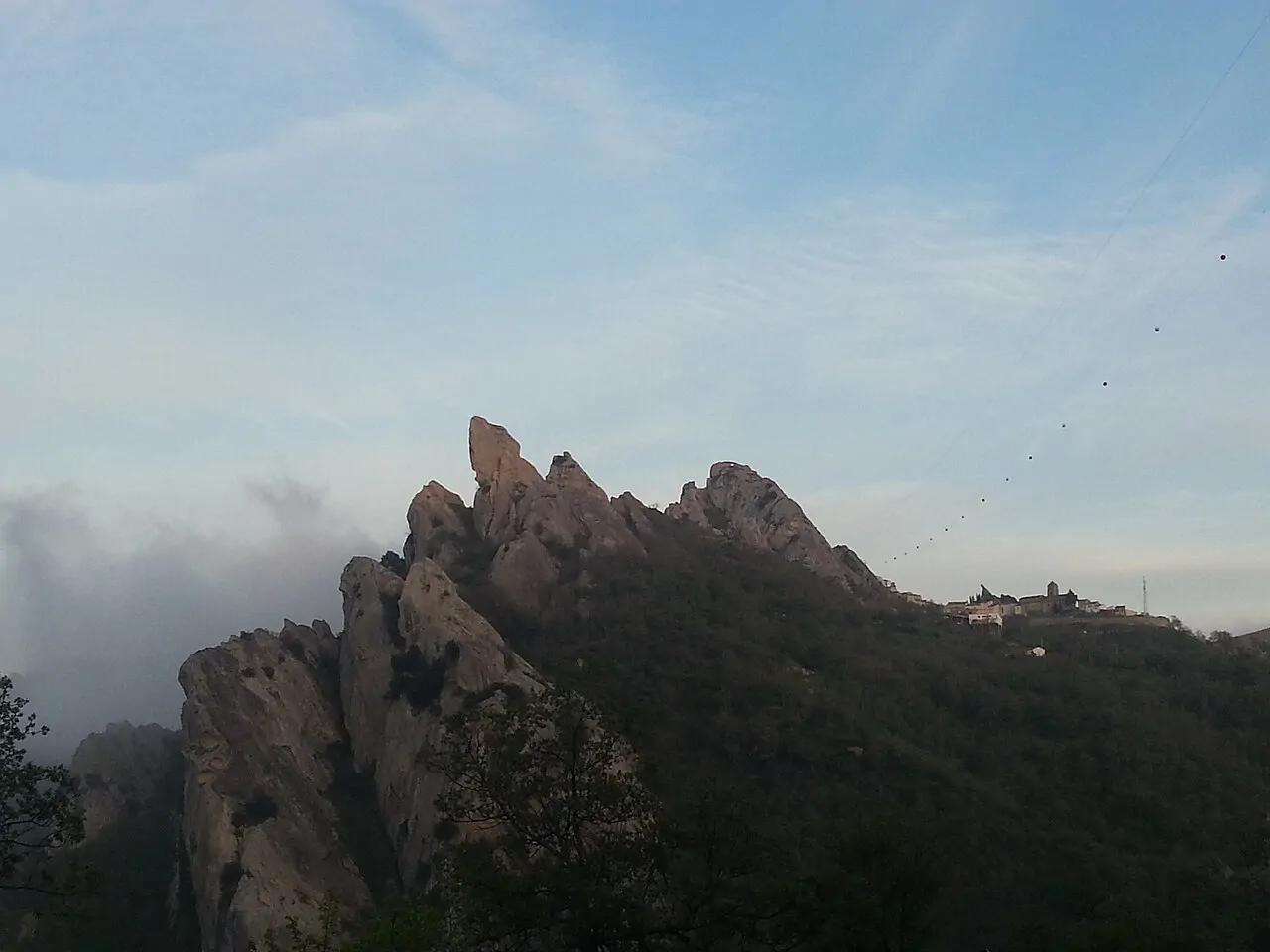
Castelmezzano and Pietrapertosa look at each other from opposite sides of the same valley: a few kilometres as the crow flies, half an hour of hairpins by car. The rocks around them are sandstone eroded into pinnacles, towers and blades, and the name Dolomites is borrowed without permission: the geology is something else entirely, the effect on the eye is the same. They are among the most photographed villages in the south, and for once the photograph does not exaggerate.
Two villages inside the rock
Pietrapertosa is the highest municipality in Basilicata and is literally pressed against the rock face: the houses end where the stone begins, and above them stand the ruins of the Saracen fortification, from which the Arabata quarter takes its name. Castelmezzano, on the other side, has the Norman Stairway: a flight of steps cut into the rock above the village, climbing to the lookout point, steep and without much in the way of railings.
They are small villages of a few hundred people, which empty in winter and fill up in summer. In the evening, once the coaches have gone, they go back to being what they are.
The Angel's Flight
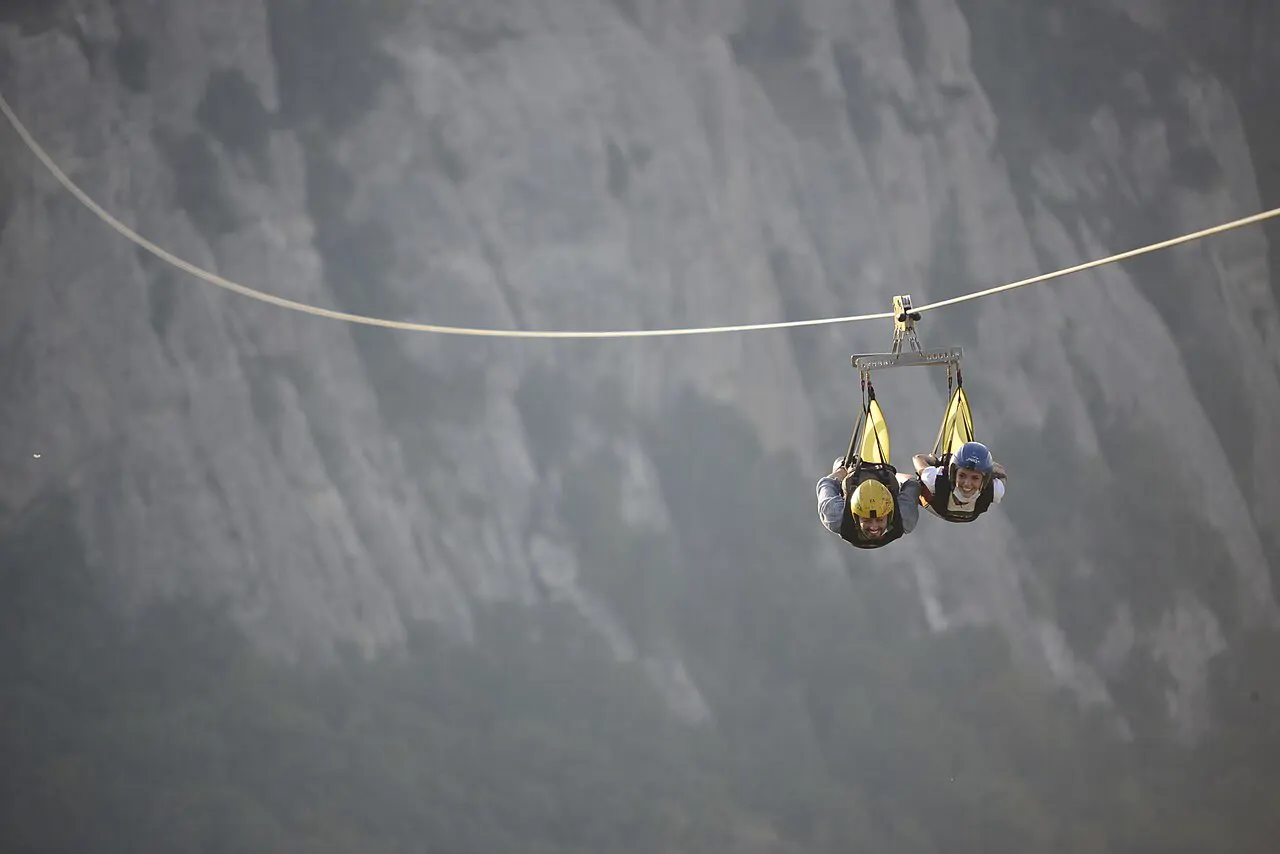
Between the two villages run two steel cables about a kilometre and a half long each, along which you travel in a harness, face down, suspended above the valley: this is the Volo dell'Angelo, the Angel's Flight. You fly in both directions, one cable each way, and on the descent you comfortably pass a hundred kilometres an hour. You book, you are weighed before setting off, and you fly in pairs or alone.
Anyone with no intention of hanging from a cable misses nothing: the valley looks just as good from solid ground, and the rest of the day works the same.
On foot, between the two
If you would rather stay on the ground there is the Path of the Seven Stones, a couple of kilometres along the old mule track that linked the two villages, with installations along the way drawn from local tradition. You go down, cross the stream and climb back up: a good hour and a half, and at the end you are in the village opposite. Anyone walking it one way should arrange the return before setting off.