
Dried peppers, bread that lasts a week
Lucanian cooking was born out of keeping food, and it is still eaten that way: few ingredients, dried, ground, put aside.
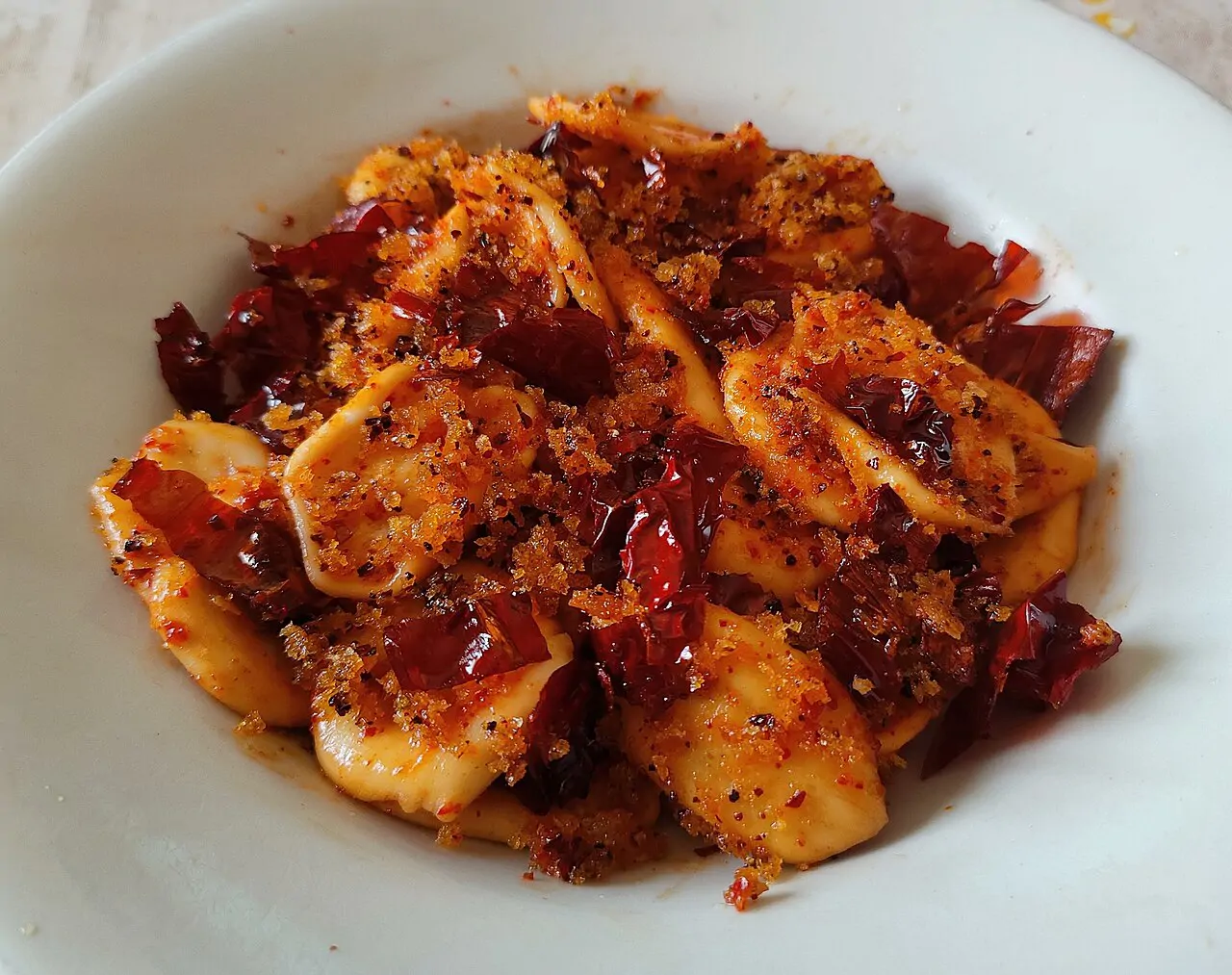
To understand Lucanian cooking you have to start from a practical fact: here food was not preserved with ice but with sun and salt. The pepper is dried, the pig is cured, the bread is made large so that it lasts the week, the milk becomes a cheese that keeps for months. This is not poor cooking in the sad sense of the phrase; it is cooking built on throwing nothing away, which is a different thing and you taste it at the first mouthful.
The crusco pepper
The Senise pepper is picked at the end of summer, threaded with needle and string into long garlands and hung to dry in the sun in front of the houses: they are called serte, and for a few weeks the villages of the Sinni valley turn red. Once dry, the pepper is fried for a few seconds in hot oil, and in those seconds it changes nature: it becomes crusco, crumbled over pasta, over salt cod or over potatoes. Crisp, sweet, not hot at all: it is the most Lucanian thing you can taste, and it is like nothing else.
It fries for a few seconds, and in those seconds it changes nature.
The crusco pepper of Senise
Matera bread
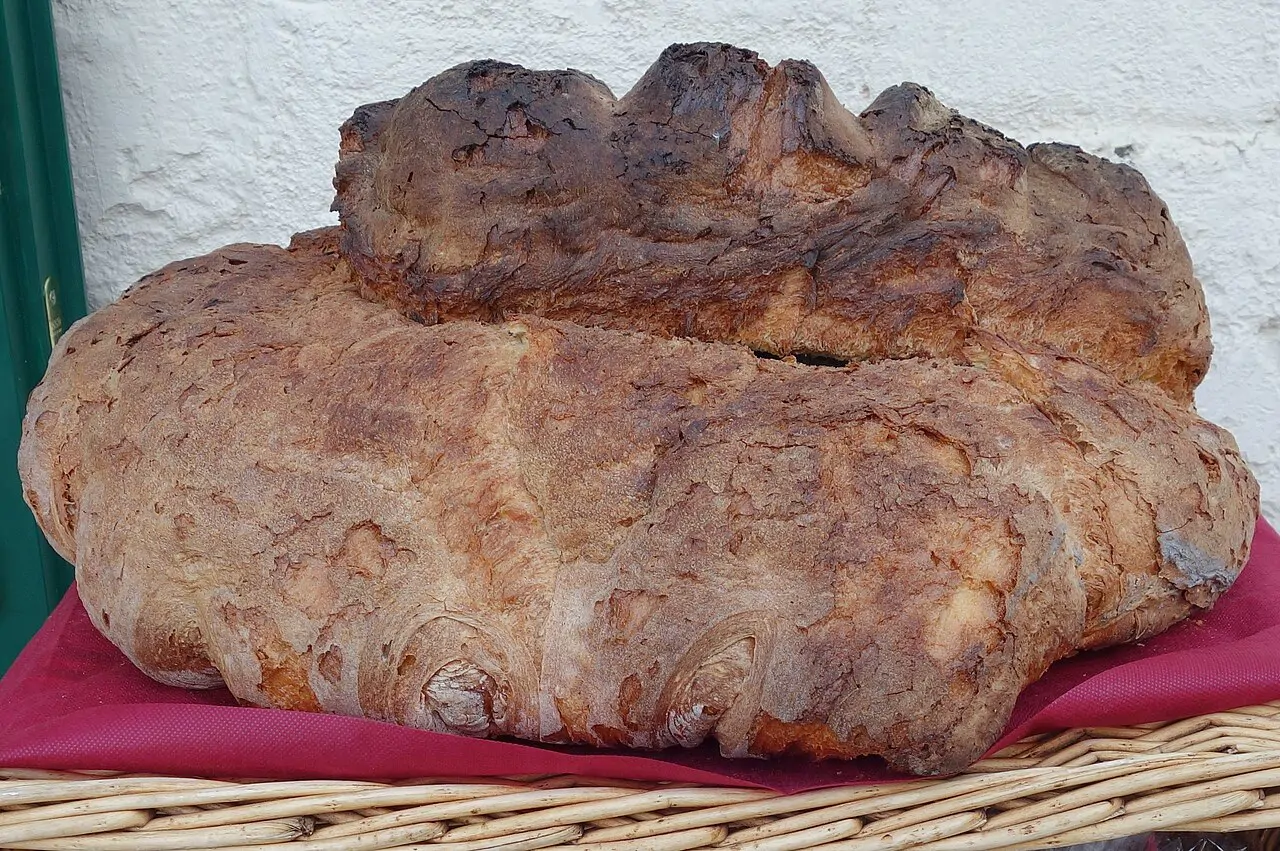
Matera bread is made with durum wheat semolina and a sourdough starter, in loaves of one or two kilos, with a dark, thick crust and a yellow, open crumb. The tall, horned shape is not an affectation: it made a loaf that would last the week for people who worked away from home and came back on Saturday. It is still good on the fifth day, which is why half the recipes in Basilicata start from stale bread, from cialledda to bruschetta with crusco peppers.
Every family marked its own loaf before taking it to the communal oven, with a carved wooden stamp bearing their initials. A few bakeries in Matera still keep them hanging on the wall.
Cheeses and cured meats
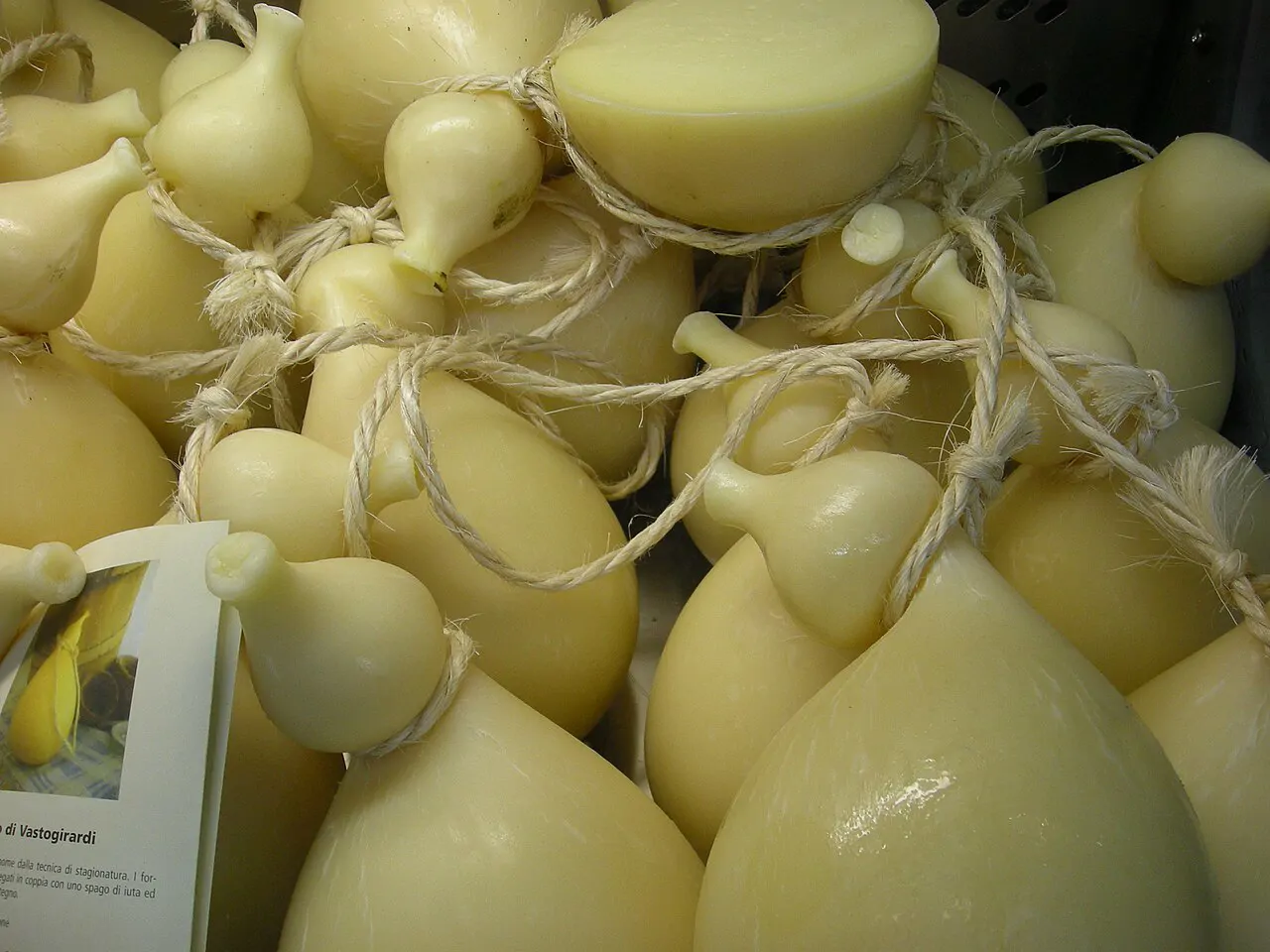
Up in the Apennines they make caciocavallo podolico, from Podolica cows that graze free and give very little milk: the cheese is aged for months, sometimes for years, and in the long ageings it takes on a scent with nothing dairy left in it. On the Pollino side you find canestrato di Moliterno, a pecorino aged in fondaci, the cool cellars on the lower floors of the houses.
The best known cured meat is lucanica, the long thin sausage from which the word for sausage in half of Europe seems to derive: Cicero and Varro already refer to it as a thing of the Lucanians. It is eaten fresh off the grill or dried and kept under lard.
To drink
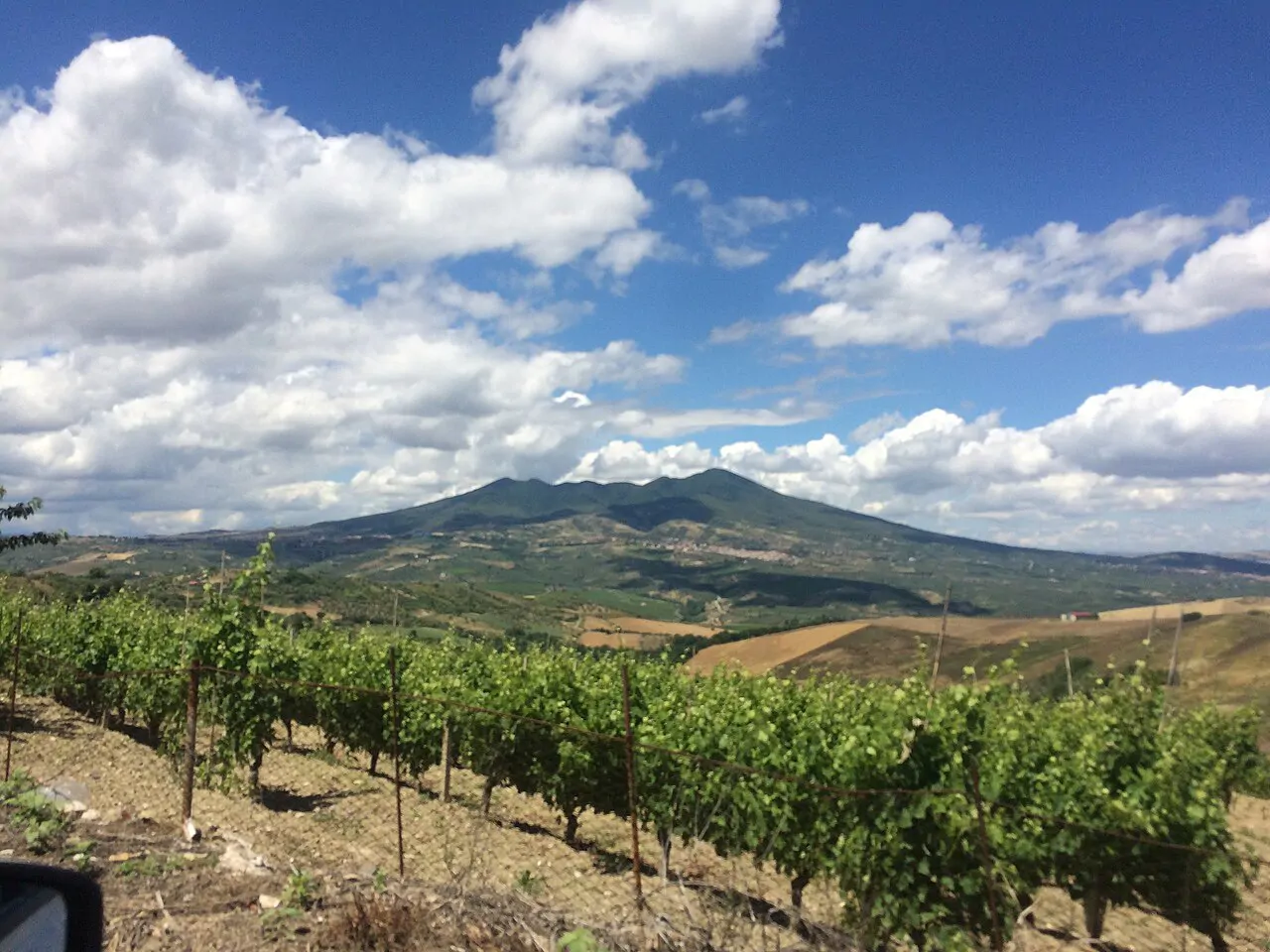
Aglianico del Vulture is grown on the volcanic soils around the mountain, on vineyards that climb to seven hundred metres. It is a very late-ripening grape, picked at the end of October and sometimes in November, and it gives a red of structure and acidity, not a wine for a snack: it wants time in the bottle and it wants something on the plate. The historic cellars between Barile and Rionero are cut into the tuff, tunnels at constant temperature used long before the refrigerator existed.
For something lighter there are the white wines of the Vulture and Malvasia; and to finish, Amaro Lucano, made at Pisticci since 1894 and familiar to every Italian, even those who never knew where it came from.