
Badlands, gorges and an extinct volcano
The Lucanian landscape is made of earth that slides away and rock that holds, often a few bends apart.
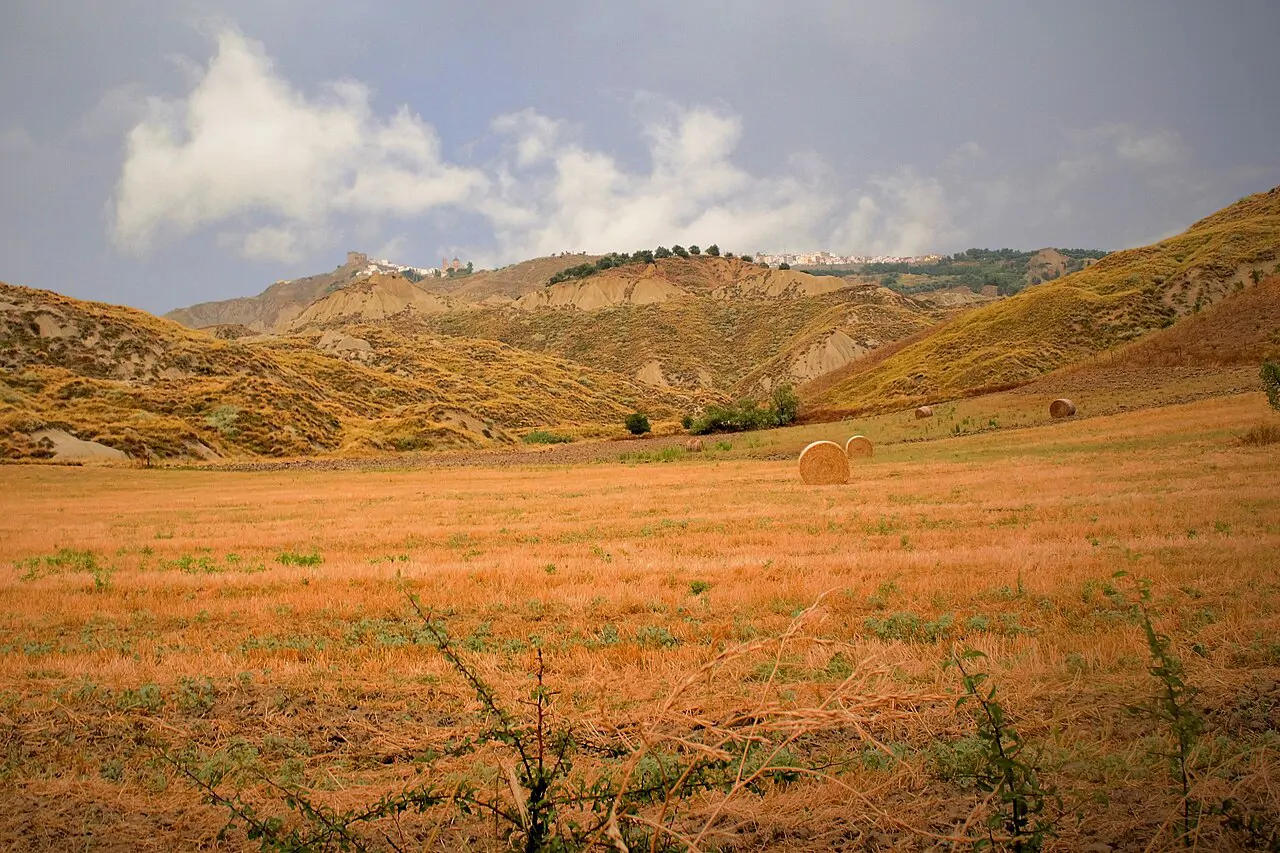
Two materials divide Basilicata between them, and the landscape depends on which of the two you are crossing. Clay, which water digs out and carries away, makes the calanchi and the bare hills of the interior. Limestone, which water cuts into without dismantling, makes the gravine and the stone plateaus around Matera. Between the two there is a third thing, more recent and smaller: an extinct volcano with two lakes inside the crater.
The calanchi
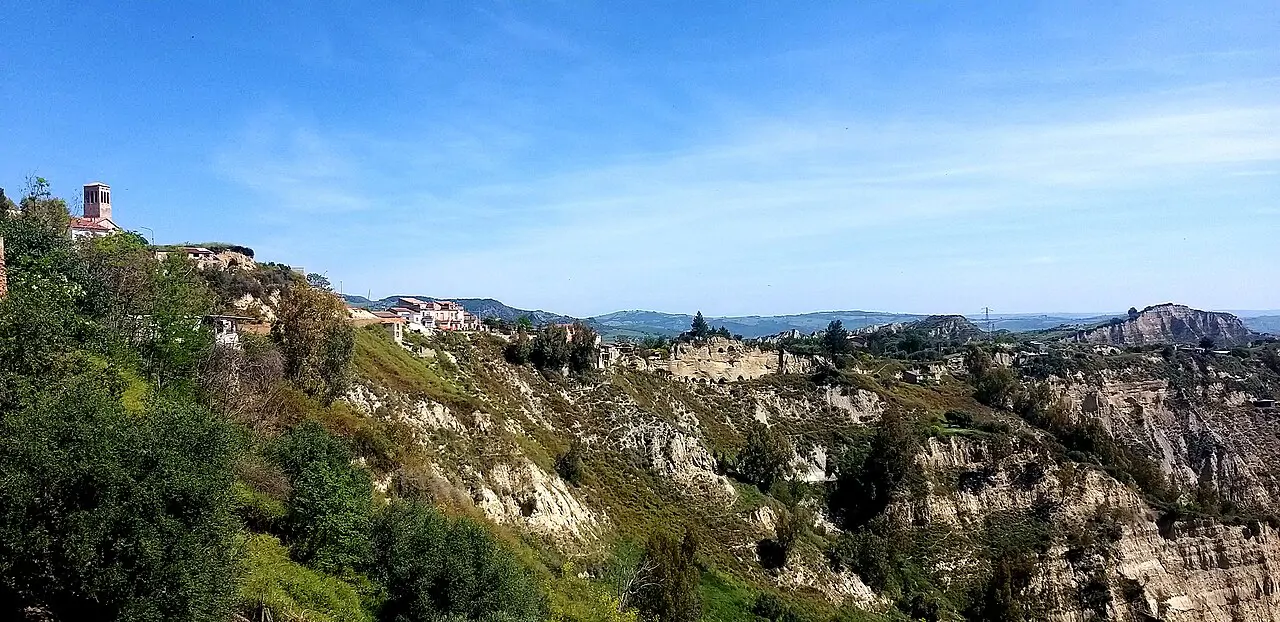
The calanchi are the most recognisable shape of inland Basilicata: grey clays carved by water into thin, sharp ridges, without a scrap of vegetation, changing colour with the hour of the day. You cross them between Aliano, Pisticci and Craco, and they are the landscape Carlo Levi found in front of him when he was sent into internal exile at Aliano, and which he described in Christ Stopped at Eboli.
They are also an open wound. The clay moves, and the villages built on it have always known: you build on the ridges because the ground in between will not hold. Come in summer and you see a dry, cracked surface; come after a storm and you see the water carrying away another piece of hillside.
Craco, the empty village
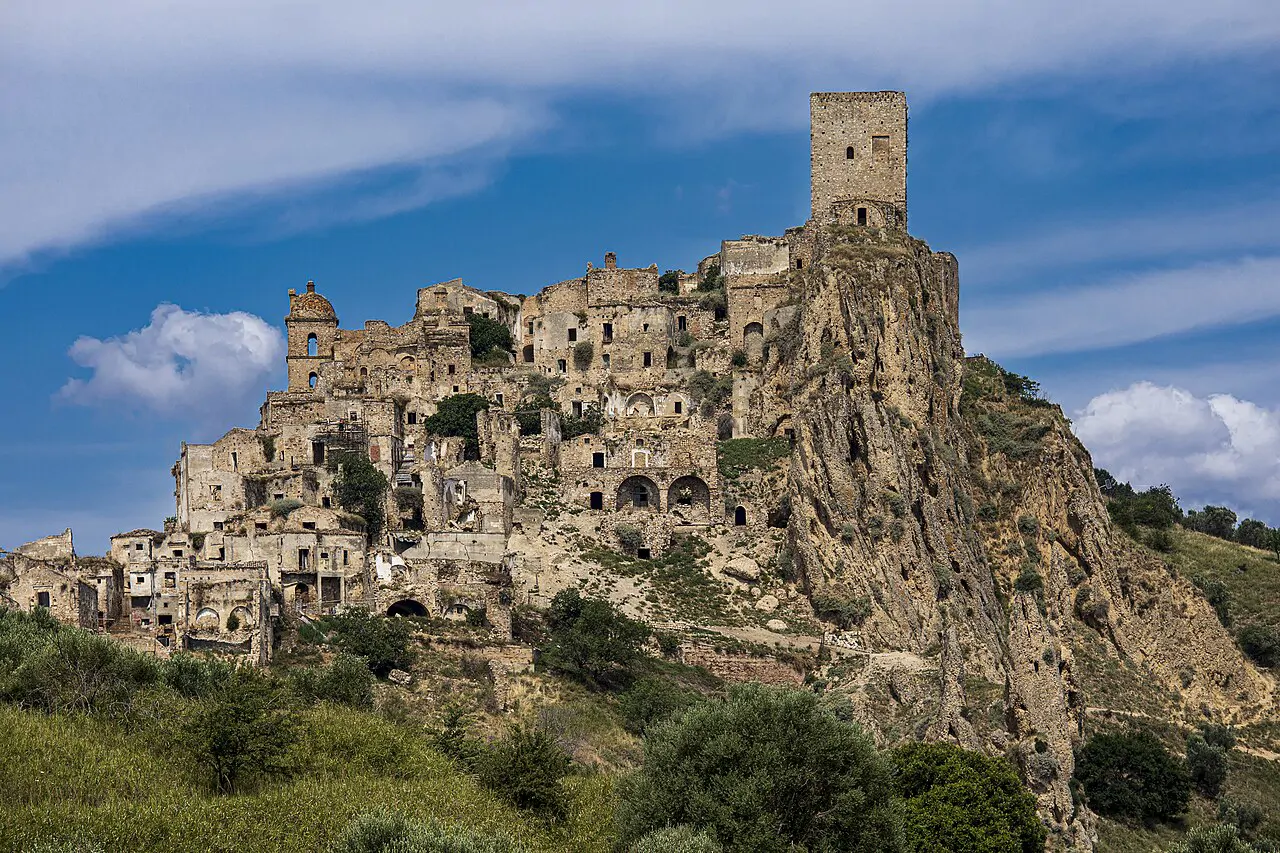
Craco is the extreme case. The old village, perched on a spur of clay, was abandoned from the 1960s onwards after a series of landslides, and today you visit it empty, with the houses standing open along the ridge and streets that end in nothing. You can only go in with a guide and a helmet: it is not a stroll among ruins, and that is exactly why it stays with you. Film crews have shot there many times, and it is easy to see why.
The gravine
The gravine are the other face of the region: narrow canyons cut into the limestone, with vertical walls, caves halfway up, churches hollowed out of the sides and birds of prey nesting inside. The Gravina of Matera separates the city from the Murgia plateau and is crossed by a suspended footbridge; on the far side, in the Murgia Materana park, more than a hundred and fifty rock churches have been recorded, many of them frescoed.
The best known of those outside the city is the Crypt of Original Sin, cut into a wall above the Picciano gorge, with a cycle of eighth-century Lombard frescoes. It can only be visited by appointment and in limited groups: the rock is fragile and the humidity of too many people ruins the colour.
The Vulture
To the north, Monte Vulture is an extinct volcano 1,326 metres high, with two lakes inside the crater, the lakes of Monticchio, ringed by a wood of beech and chestnut that in summer is the coolest place in the region. The abbey of San Michele looks out over the smaller lake, wedged into the rock face.
The volcanic soils around the mountain are the reason for Aglianico del Vulture, and for the cellars dug into the tuff between Barile and Rionero: tunnels at constant temperature, used to mature wine long before refrigeration existed.