
Festivals that come from a long way back
In Basilicata the festival calendar is still the farming one, and it shows: a tree is felled, a float is torn apart, a fire is lit.
Lucanian festivals have one feature that sets them apart from many others: nearly all of them end with something being destroyed or consumed. A float pulled to pieces, a tree cut down and raised again, a bonfire. They are not shows built for an audience: they are rites a village performs for itself, and passing visitors are simply allowed in.
The Madonna della Bruna
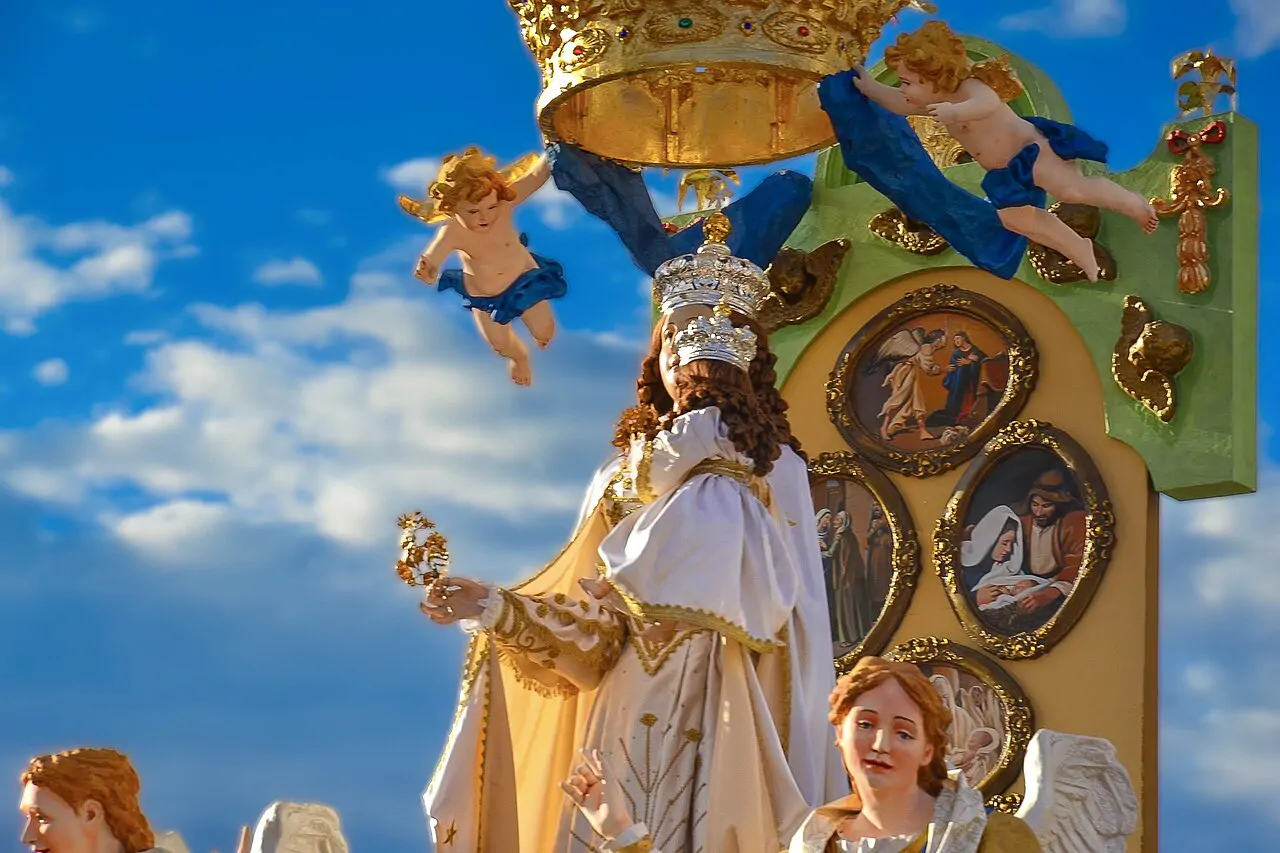
On 2 July, Matera celebrates the city's most important festival, and the ending is famous: the triumphal papier-mache float, built over a year of work and only just paraded through the streets, is stormed by the crowd and taken apart with bare hands in a few minutes. Everyone carries a piece of it home. They call it the strazzo, and it is not tolerated vandalism: it is the rite, and it is the reason the float is built again from scratch every year.
A year of work destroyed in a few minutes, and everyone carries a piece of it home.
The strazzo of the float, Matera, 2 July
The tree rites
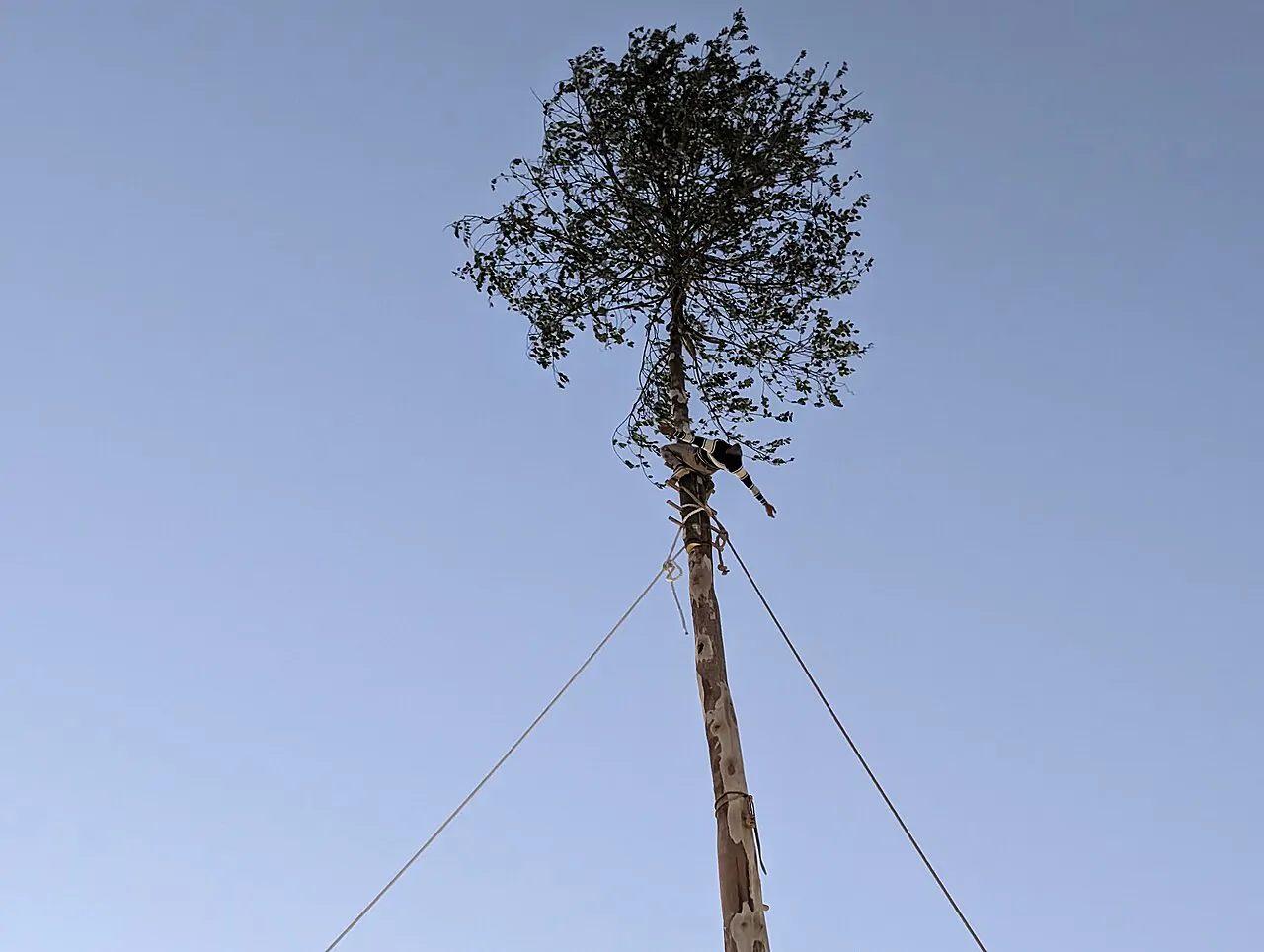
In the villages of the Pollino and the Lucanian Dolomites something older still survives: a tree is chosen in the wood, felled, dragged into the village by oxen or by arms, and raised in the square, often grafted with the top of another tree. The best known is the Maggio di Accettura, held between May and June and lasting several days; similar rites take place at Castelsaraceno, Rotonda, Viggianello, Terranova di Pollino and Oliveto Lucano.
Anyone expecting a fair with market stalls will be wrong-footed: hauling the tree is a collective slog lasting hours, with hundreds of people pulling, and the public is inside it rather than in front of it.
The summer food festivals
In summer the sagre follow the harvests, from peppers to chestnuts by way of Sarconi beans and bread. They are the most direct way to eat well for very little, and to see an inland village full instead of empty. Dates change from year to year and are often settled late: ask at the campsite or in the village bar, which usually knows before the internet does.
And the Arbereshe villages
In the Arbereshe municipalities of the province of Potenza, founded by Albanian refugees in the fifteenth and sixteenth centuries, the calendar is different again: Easter is celebrated with rites of Byzantine tradition, in a language no longer spoken in Albania. San Paolo Albanese and San Costantino Albanese are the two places where this is most alive.